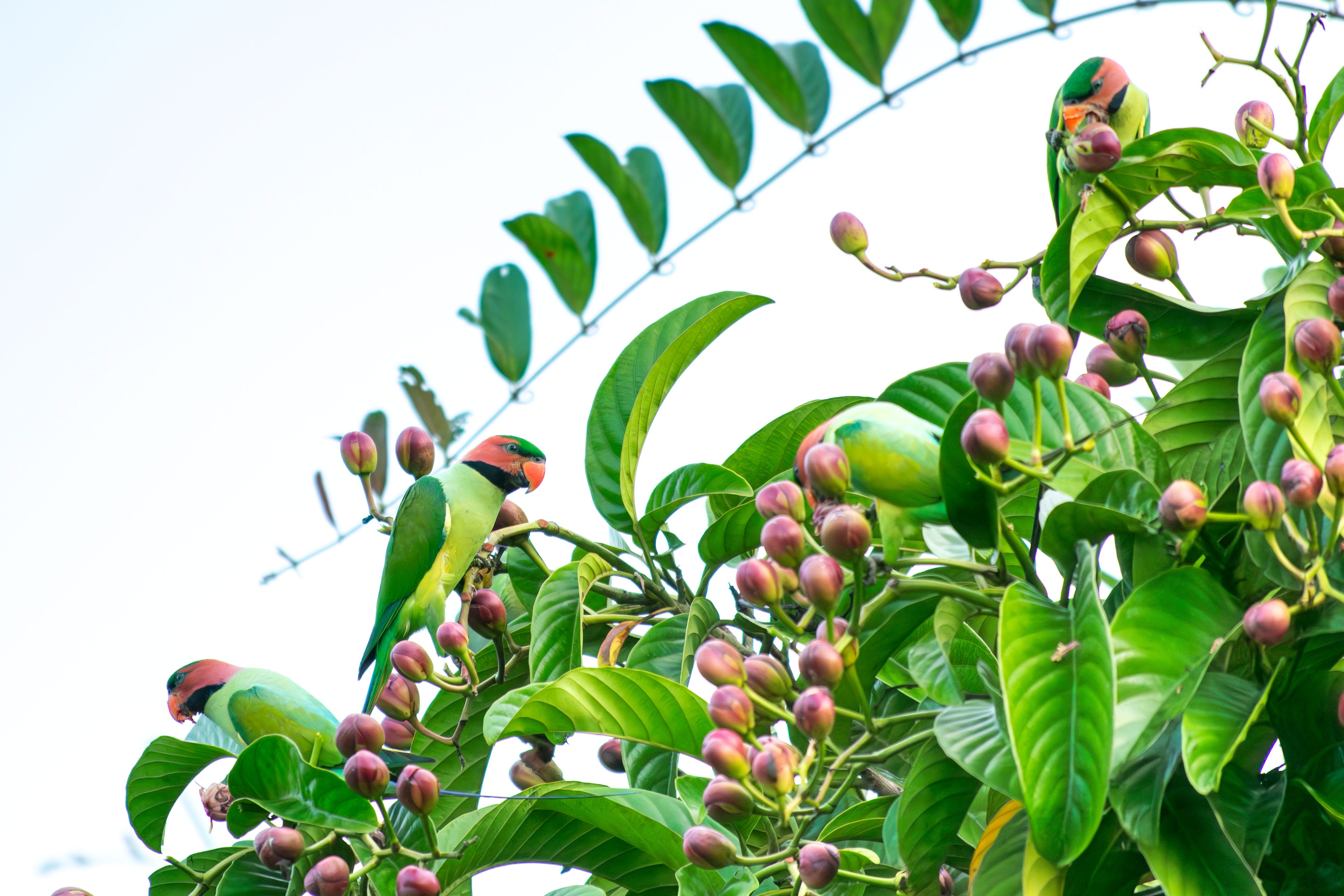
Building Capacity to Monitor Forest Integrity Across Rimba Collective
Protecting forests is about more than preventing deforestation. It also means understanding whether the ecological health of those forests is being maintained over time. To support this goal, HCV Network (HCVN) and Rimba Collective recently partnered to deliver a week-long Forest Integrity Assessment (FIA) training programme in West Kalimantan, Indonesia.
The training marks an important step in strengthening ecological monitoring across Rimba Collective portfolio of conservation projects. As part of its newly established Monitoring, Evaluation and Learning (MEL) framework, Rimba Collective is introducing FIA as a practical tool for measuring ecosystem condition, establishing baseline data, and tracking ecological change throughout the 25-year lifespan of its projects.
This work forms part of Rimba Collective's broader effort to understand whether conservation activities are maintaining and improving forest condition over time. The evidence generated through FIA will support adaptive management and help strengthen long-term conservation outcomes for nature and people.
Beyond monitoring, FIA also helps generate robust evidence to support adaptive management, sustainability reporting, and internationally recognised conservation standards. In the future, FIA results are expected to complement SMART patrol data, providing a more complete picture of ecosystem condition and helping project teams make better-informed management decisions.
A Partnership Focused on Long-Term Capacity
Rather than simply delivering a training course, the collaboration between HCV Network and Rimba Collective is designed to build long-term internal capacity. HCV Network brings technical expertise in forest integrity assessment, sampling design, and methodology development, while Rimba Collective provides the operational experience needed to embed these approaches across diverse conservation landscapes. Together, the partnership aims to develop practical FIA procedures that can be consistently applied while remaining flexible enough to reflect local ecological conditions. Ultimately, the goal is for Rimba Collective teams to confidently implement FIA independently across the entire Rimba Collective portfolio.
Where Theory Meets the Forest
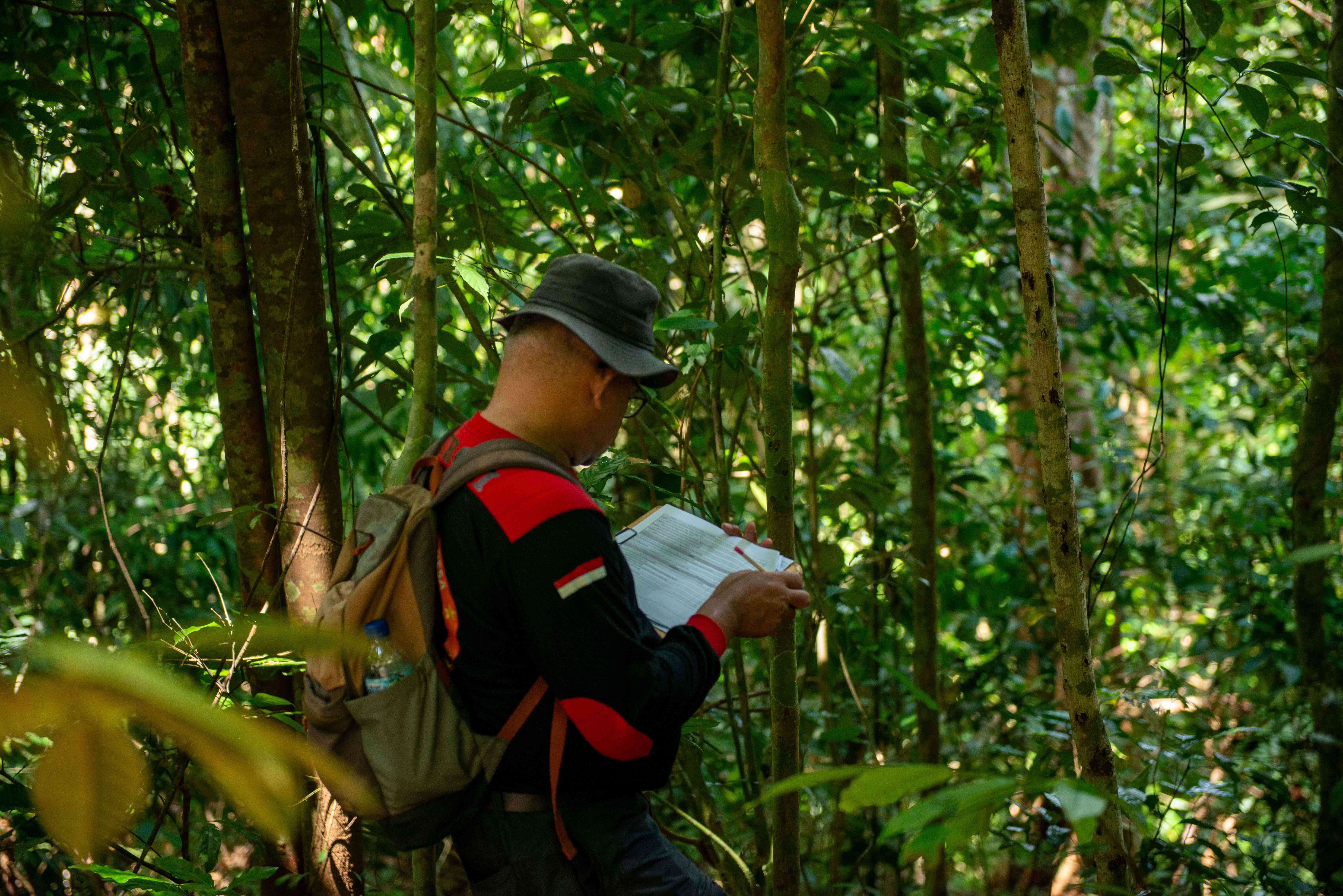
Recognising that every landscape is different, the training adopted a participatory, bottom-up approach. Participants were encouraged to contribute their local knowledge throughout the process, ensuring that the methodology remained scientifically robust while being practical for field implementation. The programme followed three key stages: developing project-specific sampling designs; delivering intensive classroom and field-based training; and refining an FIA procedure that can be replicated across future project sites.
Seven Days in the Forest
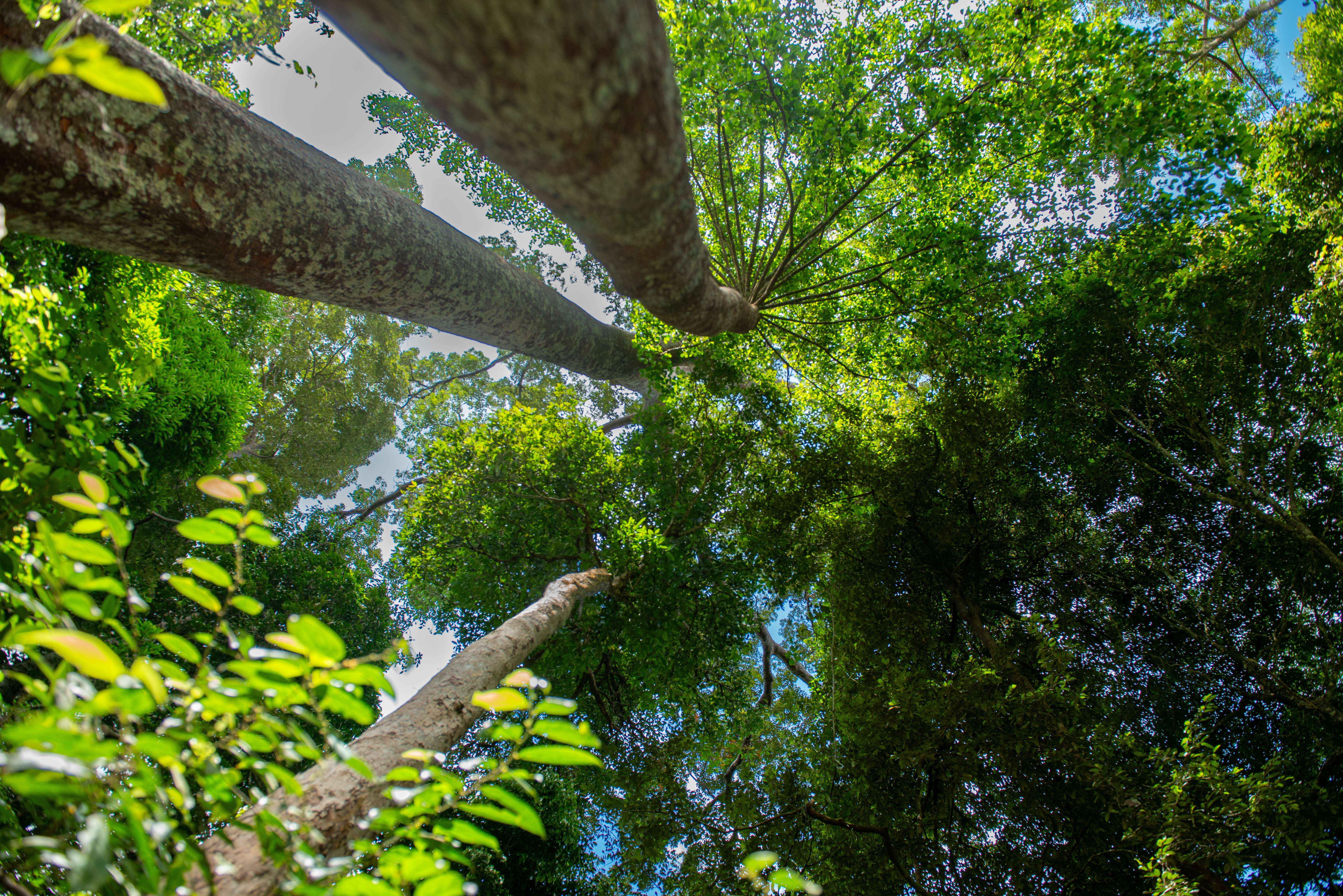
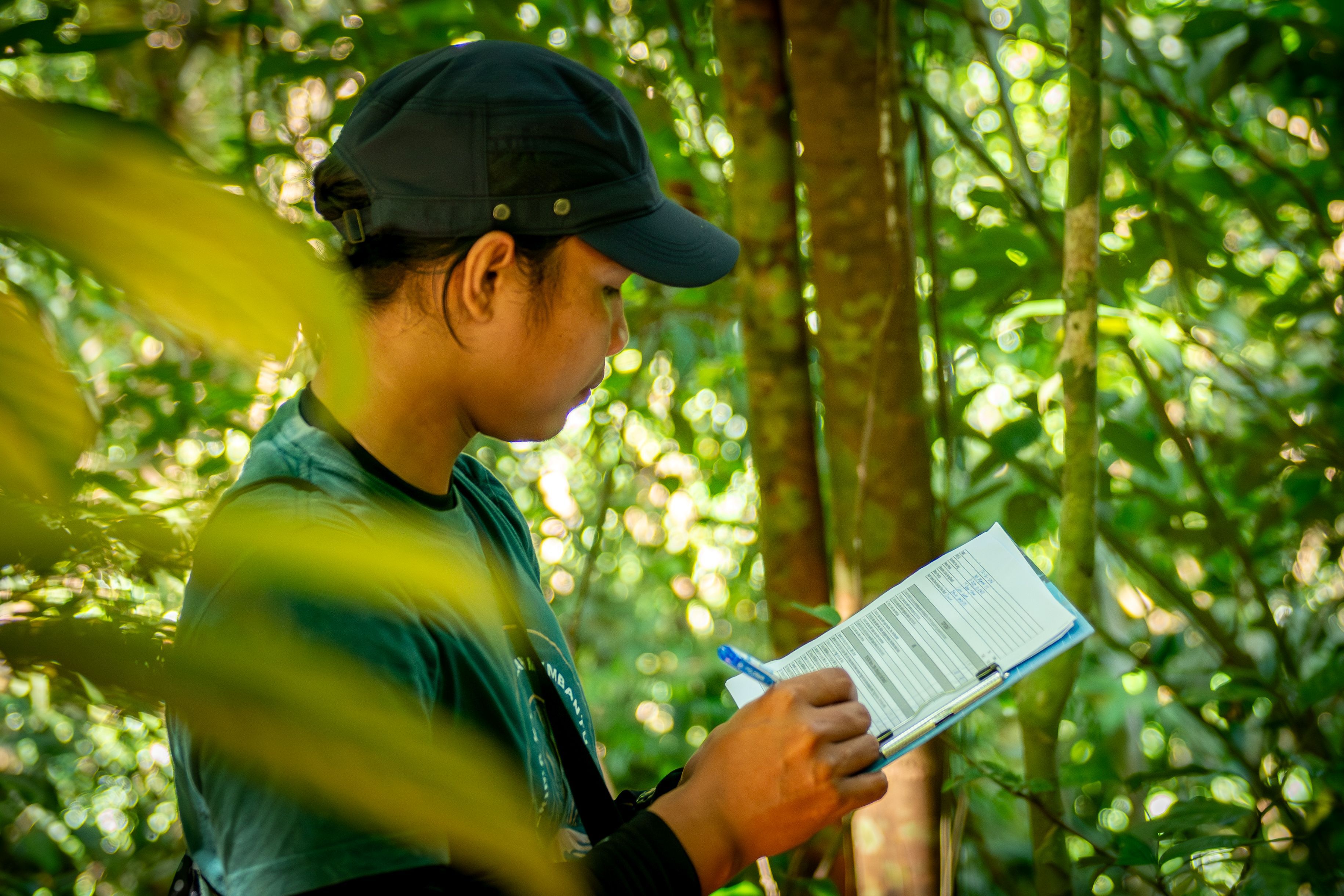
The training was held over seven days at a Tropenbos Indonesia project site in Ketapang District, West Kalimantan. The location was chosen because it represents two of the major ecosystem types found across Rimba Collective portfolios, lowland dipterocarp forest and peat swamp forest. A total of 16 participants attended, representing Rimba Collective and three project operators: Tropenbos Indonesia (TI), People Resources and Conservation Foundation (PRCF) Indonesia, and Bentang Kalimantan Tangguh (BKT). Representatives from three Village Forest Management Institutions / Lembaga Pengelola Hutan Desa (LPHDs) Pangkalan Telok, Sungai Pelang, and Sungai Besar, also joined the programme, bringing valuable local perspectives into the discussions and field exercises.
The week began with an introduction to FIA principles and sampling approaches before moving into five days of field practice. Participants spent three days assessing lowland dipterocarp forests and two days working in peat swamp ecosystems, applying the FIA methodology across contrasting forest conditions. The programme concluded with a classroom session where participants reviewed field observations, discussed lessons learned, refined sampling approaches, and explored how FIA could be integrated into future monitoring activities at their respective sites.
Looking Ahead
The training represents the first phase of a broader effort to establish a consistent and credible approach to monitoring ecosystem condition across the Rimba Collective portfolio.
By investing in the knowledge and skills of project teams, HCV Network and Rimba Collective are laying the foundation for a monitoring system that not only generates reliable ecological data but also supports adaptive management and continuous learning. As FIA is rolled out across additional project sites, the experience gained during this training will help ensure that forest integrity can be monitored consistently, while remaining responsive to the unique characteristics of each landscape.
Related Posts
Building Capacity to Monitor Forest Integrity Across Rimba Collective
Read More
Interview with Erik Meijaard: Bridging the Gap: How Citizen Science Can Strengthen HCV Implementation
Read More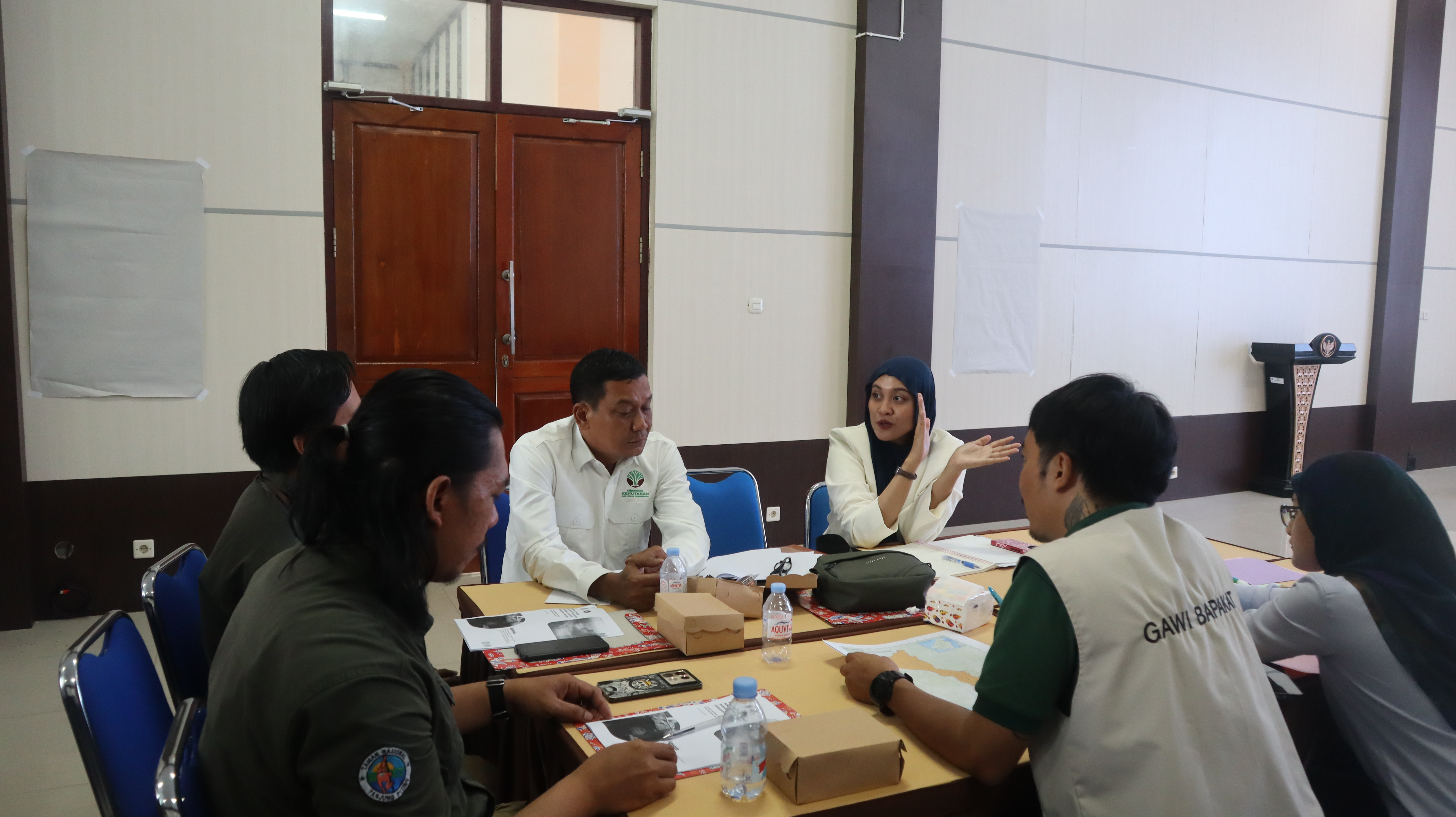
Menjembatani Teknologi dan Konservasi: Refleksi Project Manager HCV Network, Mirzha Hanifah, dari Tiga Inisiatif Lanskap di Indonesia
Read MoreOur Partnerships
Alongside many global initiatives, our work with partners promotes practices that help meet the global Sustainable Development Goalsand build a greener, fairer, better world by 2030.
Femexpalma
In April 2022, FEMEXPALMA and the HCV Network signed a 5-year cooperation agreement to promote sustainable production of palm oil in Mexico. FEMEXPALMA is a Mexican independent entity that represents palm production at the national level and promotes the increase of productivity in a sustainable way.
With global markets becoming stricter, for Mexican producers to be able to export to key markets such as the European Union, they must meet strict requirements such as certification by the Roundtable on Sustainable Palm Oil (RSPO). To be certified by RSPO, the HCV Approach must be applied prior to the establishment of any new oil palm plantations. With this cooperation agreement, the HCV Network will support FEMEXPALMA’s members and allies to design better strategies to identify, manage and monitor High Conservation Values and support smallholders to achieve RSPO certification and implement good agricultural practices.

High Carbon Stock Approach
The High Carbon Stock Approach (HCSA) is an integrated conservation land use planning tool to distinguish forest areas in the humid tropics for conservation, while ensuring local peoples’ rights and livelihoods are respected.
In September 2020, HCV Network and the HCSA Steering Group signed a five-year Memorandum of Understanding (MoU) to strengthen their collaboration to conserve forests and uphold community rights in tropical forests. The HCS and HCV Approaches are cornerstones of corporate no deforestation and conservation commitments, and increasingly for actors working at different scales. The collaboration aims to further support effective implementation of these commitments through increased uptake of the HCV and HCS tools.
Through this MoU, HCSA and HCVRN are pursuing two main strategic goals:
- Strive to promote the application of the two approaches in tropical moist forest landscapes and explore further opportunities for collaboration.
- Ensure that, where the two approaches are applied together, this happens in a coordinated, robust, credible, and efficient manner, so that HCS forests and HCVs are conserved, and local peoples’ rights are respected.

World Benchmarking Alliance
From May 2022, the HCV Network is an ally at the World Benchmarking Alliance (WBA). WBA is building a diverse and inclusive movement of global actors committed to using benchmarks to incentivise, measure, and monitor corporate performance on the SDGs, and will assess and rank the performance of 2,000 of the world’s most influential companies against seven systems of transformation by 2023.
The scope of WBA’s circular transformation was expanded to cover nature and biodiversity as recognition of the need for greater understanding, transparency and accountability of business impact on our environment. The WBA Nature Benchmark was launched in April 2022, which will be used to rank keystone companies on their efforts to protect our environment and its biodiversity. As HCV Areas are recognised as key areas important for biodiversity, companies that publicly disclose their actions to identify and protect HCVs will contribute to the assessment of their performance against the benchmark.
Taskforce on Nature-related Financial Disclosures - TNFD
The Taskforce on Nature-related Financial Disclosures (TNFD) is a global, market-led initiative, established with the mission to develop and deliver a risk management and disclosure framework for organizations to report and act on evolving nature-related risks, with the aim of supporting a shift in global financial flows away from nature-negative outcomes and toward nature-positive outcomes.
In April 2022, the HCV Network joined the TNFD Forum. The TNFD Forum, composed of over 400 members, is a world-wide and multi-disciplinary consultative network of institutional supporters who share the vision and mission of the task force.
By participating in the Forum, the HCV Network contributes to the work and mission of the taskforce and help co-create the TNFD Framework which aims to provide recommendations and advice on nature-related risks and opportunities relevant to a wide range of market participants, including investors, analysts, corporate executives and boards, regulators, stock exchanges and accounting firms.
Aquaculture Stewardship Council
The Aquaculture Stewardship Council (ASC) is the world’s leading certification scheme for farmed seafood – known as aquaculture – and the ASC label only appears on food from farms that have been independently assessed and certified as being environmentally and socially responsible. In 2021, the HCV Network and ASC formalised their collaboration through a Memorandum of Understanding (MoU). The MoU represents the first step in a fruitful relationship aimed at conserving HCVs in aquaculture. Although, existing guidance on the use of the HCV Approach currently focuses mainly on forestry and agriculture, the HCV Approach is however generic, and in principle also applicable to aquatic production systems. Through this MoU, this is recognised by the Aquaculture Stewardship Council (ASC) in their ASC farm standard, in which the protection of HCV areas is mentioned in the context of expansion
Accountability Framework Initiative
The Accountability Framework initiative (AFi) is a collaborative effort to build and scale up ethical supply chains for agricultural and forestry products. Led by a diverse global coalition of environmental and human rights organizations, the AFi works to create a “new normal” where commodity production and trade are fully protective of natural ecosystems and human rights. To pursue this goal, the coalition supports companies and other stakeholders in setting strong supply chain goals, taking effective action, and tracking progress to create clear accountability and incentivize rapid improvement. In July 2022, the HCV Network joined AFi as a Supporting Partner. AFi Supporting Partners extend the reach and positive impact of the AFi by promoting use of the Accountability Framework by companies, industry groups, financial institutions, governments, and other sustainability initiatives, both globally and in commodity-producing countries.
Biodiversity Credit Alliance
The Biodiversity Credit Alliance (BCA) is a global multi-disciplinary advisory group formed in late 2022. Its mission is to bring clarity and guidance on the formulation of a credible and scalable biodiversity credit market under global biodiversity credit principles. Under these principles, the BCA seeks to mobilize financial flows towards biodiversity custodians while recognising local knowledge and contexts.
The HCVN joined the BCA Forum in August 2023 to learn more from the many organizations already coming together to find effective pathways to opening up credit-based approaches, and how to contribute our knowledge and experience of years of working in a practical way, often with global sustainability standards and their certified producers, to protect what matters most to nature and people.
.webp)
Nature Positive Forum
The Nature Positive Initiative is a group of stakeholders coming together to find ways to unlock success and achieve Nature Positive - a global societal goal defined as ‘halt and reverse nature loss by 2030 on a 2020 baseline, and achieve full recovery by 2050’, in line with the mission of the Kunming-Montreal Global Biodiversity Framework.
Core work includes preserving the integrity of ‘Nature Positive’ as a measurable 2030 global goal for nature for business, government, and other stakeholders, and providing the tools and guidance necessary to allow all to contribute. The initiative also advocates for the full implementation of the Kunming-Montreal Global Biodiversity Framework by governments and other stakeholders.
IUCN
IUCN is a membership Union uniquely composed of both government and civil society organisations. It provides public, private, and non-governmental organisations with the knowledge and tools that enable human progress, economic development, and nature conservation to take place together.
Created in 1948, IUCN is now the world’s largest and most diverse environmental network, harnessing the knowledge, resources and reach of more than 1,400 Member organisations and around 15,000 experts. It is a leading provider of conservation data, assessments, and analysis. Its broad membership enables IUCN to fill the role of incubator and trusted repository of best practices, tools, and international standards.
IUCN provides a neutral space in which diverse stakeholders including governments, NGOs, scientists, businesses, local communities, indigenous peoples’ organisations, and others can work together to forge and implement solutions to environmental challenges and achieve sustainable development.
Working with many partners and supporters, IUCN implements a large and diverse portfolio of conservation projects worldwide. Combining the latest science with the traditional knowledge of local communities, these projects work to reverse habitat loss, restore ecosystems, and improve people’s well-being.

Get Involved
Our Mission as a network is to provide practical tools to conserve nature and benefit people, linking local actions with global sustainability targets.
We welcome the participation of organisations that share our vision and mission to protect and enhance High ConservationValues and the vital services they provide for people and nature. By collaborating with the Network, your organisation can contribute to safeguarding HCVs while gaining valuable insights and connections that support your sustainability goals.
We are seeking collaborative partners to help expand and enhance our work, as well as talented professionals who can join the growing Secretariat team, and for professionals who can contribute to the credible identification of High Conservation Values globally.
Join us in securing the world’s HCVs and shaping a sustainable future.